


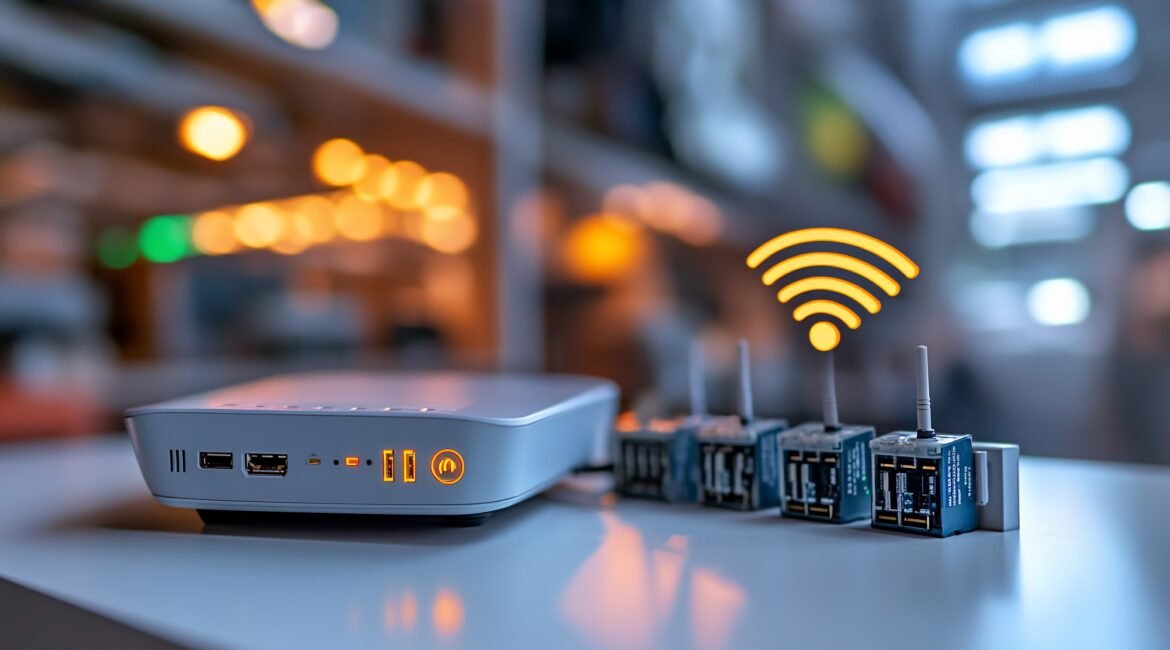
As always-on connectivity becomes essential across industrial, remote, and mobile environments, LTE stands out as a dependable wireless communication technology. This often leads to a common technical question; The Role of Routers in LTE Network Access?
The answer depends entirely on the router’s design and internal hardware capabilities.
A router cannot receive LTE signals unless it is specifically designed for cellular communication. While the term “router” is often used generically, not all routers are equipped to interact with mobile networks. Understanding this distinction is essential when designing reliable network architectures.
What Is an LTE Router?
The LTE router is a specialized networking device that integrates a cellular modem within the router it-self. This enables the device to connect directly to LTE networks via a SIM card, eliminating the need for external modems or wired infrastructure.
Once connected to the LTE network, the router converts cellular data into standard IP traffic and distributes it to connected devices through Ethernet ports or Wi-Fi. Users experience the same performance and reliability as traditional broadband, with the flexibility of wireless access
Key characteristics of LTE routers include;
- Built-in LTE modem and SIM slot.
- Support for external or high-gain antennas.
- LAN and/or Wi-Fi connectivity for downstream devices.
How LTE Connectivity Works?
LTE is a 4G cellular broadband technology that provides high-speed data transmission over network, licensed radio spectrum through cellular GSM towers in the mobile communication. Unlike wired internet connections, LTE relies on radio frequency signal communication and SIM-based authentication to establish network access B/W tensimeter to receiver.
The LTE connectivity requires dedicated cellular hardware such as an SIM, LTE modem, GSM antenna interfaces, and carrier-compatible firmware. Without these components, a router simply cannot detect or decode LTE signals.
How an LTE Router Establishes a Connection?
When powered on, an LTE router scans for available cellular networks within range. Upon identifying a compatible network, it authenticates using the inserted SIM card and establishes a secure data session with the service provider. Once connected, the router manages routing, security, and traffic handling in the same manner as a conventional router.
This process enables reliable connectivity even in locations where wired infrastructure is unavailable, difficult to deploy, or too costly.
Application of LTE Routers Are Commonly Used;
The LTE routers are widely adopted across industries that require dependable communication beyond traditional network boundaries. They are particularly valuable in environments that require mobility, rapid deployment, or remote access in the remote areas.
Typical applications include;
- Industrial automation and remote monitoring
- IoT gateways and telemetry systems
- Surveillance and security networks
- Utilities, oil & gas, and mining operations
- Temporary sites and backup WAN connectivity
Benefits of Using LTE Routers:
One of the key advantages of LTE routers is their ability to deliver internet connectivity without dependence on physical cabling. This significantly reduces deployment time and increases flexibility. LTE routers also support business continuity by serving as primary or backup connections, ensuring minimal downtime.
Additionally, modern LTE routers often include advanced features such as VPN support, firewall protection, and remote device management, making them suitable for enterprise and industrial use cases.
Conclusion:
The Role of Routers in LTE Network Access, Standard routers lack the required hardware to interact with LTE networks and must rely on external devices for cellular access. LTE routers bridge this gap by combining routing functionality with integrated cellular technology.
As organizations continue to expand into remote operations, industrial automation, and IoT deployments, LTE routers remain a practical, reliable, and scalable solution for wireless network connectivity.
Thanking You.!