


Home
About ▾
SAN Group Profile SAN Telequip Profile Technology Leadership Career
Products ▾
Industrial Ethernet
Switches
Unmanaged Ethernet Switches Managed Ethernet Switches PoE Ethernet Switches Layer 3 Ethernet Switches
Media
Converters
Industrial grade media Converter Commercial grade media Converter Protocol Converter Interface Converter Isolators / Repeaters Surge Protectors / Suppressors Bluetooth Converter Hub
Industrial Grade
Secure Terminal Server
4 Port Terminal Server 8 Port Terminal Server 16 Port Terminal Server 32 Port Terminal Server
IoT
Gateways
Industrial VPN Routers Smart Alert Gateways Cellular Modems MQTT Gateway
Protocol
Gateways
BacNet Gateway LoRa Gateway HART Gateway IO's Gateway
Applications ▾
Oil & Gas System Integrator Power & Energy Automotive Process Automation Industrial Automation Mining
Building Automation TMS/ATMS Security & Surveillance Data Center Railway / Metro Infrastructure
Events ▾
Blog News Case Studies/Application Note Webinars
Resources ▾
Disclaimer
Certificates▾
Incorporation Certificate ISO Certificate MSME Certificate
Contact
☰
    • SAN Group Profile
    • SAN Teleqip Profile
    • Technology
    • Leadership
    • Career
    • Industrial Ethernet Switches
    • Unmanaged Ethernet Switches
    • Managed Ethernet Switches
    • PoE Ethernet Switches
    • Layer 3 Ethernet Switches

    • Media Converters
    • Industrial grade media Converter
    • Commercial grade media Converter
    • Protocol Converter
    • Interface Converter
    • Isolators / Repeaters
    • Surge Protectors
    • Bluetooth Converter
    • Hub

    • Industrial Grade Secure Terminal Server
    • 4 Port Terminal Server
    • 8 Port Terminal Server
    • 16 Port Terminal Server
    • 32 Port Terminal Server

    • IoT Gateways
    • Industrial VPN Routers
    • Smart Alert Gateways
    • Cellular Modems
    • MQTT Gateway

    • Protocol Gateways
    • BacNet Gateway
    • LORA Gateway
    • HART Gateway
    • IO's Gateway
    • Oil & Gas
    • System Integrator
    • Power & Energy
    • Automotive
    • Process Automation
    • Industrial Automation
    • Building Automation
    • TMS/ATMS
    • Security & Surveillance
    • Data Center
    • Railway / Metro
    • Infrastructure
    • Mining
    • Blog
    • News
    • Case Studies/Application Note
    • Webinars
    • Disclaimer
      • Incorporation Certificate
      • ISO Certificate
      • MSME Certificate
San new Logo
  • Home
  • About
    • Company Profile
    • Group Profile
    • Technology
    • Leadership
    • Career
    • Contact
  • Oil & Gas
  • Blog
Free Consultations
  • Home
  • About
    • Company Profile
    • Group Profile
    • Technology
    • Leadership
    • Career
    • Contact
  • Oil & Gas
  • Blog
Lorem ipsum dolor sit amet, consectetur adipiscing elit. Ut elit tellus, luctus nec ullamcorper mattis, pulvinar dapibus leo.
By SANFebruary 13, 2026in Blog

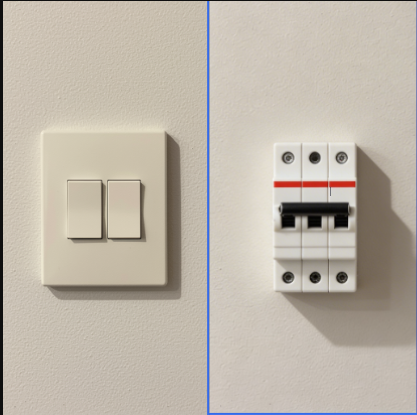
Understanding the Real Difference Between Industrial and Normal Switches 

The Ethernet switches are core elements of modern networking, but they are not intended for use in all conditions. Commercial (or office-type) ethernet switches are the types most often found in IT environments, while industrial ethernet switches are made to function in higher demand production environments. When designing networks that must be reliable, secure, and operate over long periods, it is essential to distinguish between these two types of switches. Both types perform the same basic functionality of forwarding ethernet traffic from one end (source) to the other (destination), but their different design philosophies, capabilities, and applications all differ by a wide margin. 

Purpose and Design Philosophy: 

Standard Ethernet switches are designed for office, home, and data centre environments, with an emphasis on high performance, data quality, and cost efficiency. This assumes that there will be a stable supply of electricity, moderate temperatures, and low levels of electrical interference. In contrast to standard switches, industrial switches are designed and rigorously tested to operate reliably across a wide range of environmental conditions. They are designed for continuous use under extreme temperature conditions, helping to protect against temperature shock, vibration, dust, moisture, and electromagnetic noise–all of which are common in factories, substations, transportation systems, as well as outdoor locations.  

IES & Mechanical Differences the construction of the two types of switches is one of the most obvious differences between the two. Industrial switches are made with heavy-duty, rugged metal enclosures and all components used in constructing the switch are of industrial-grade quality, ensuring extreme durability and long life.  

Key Differences in Environmental Options; 

  •  Temperature: Engineered for stable performance in wide temperature environments. 
  • Resistance: to shock, vibration, and electromagnetic radiation is very high compared to normal switches.  
  • Mounting Options: Options available are typically DIN-rail or panel-mounted for industrial switches.  
  • Enclosure: Standard switches typically use plastic enclosures and are limited to controlled environmental conditions 

Considerations Regarding Power and Reliability: 

Industry mandates high availability from their systems; thus, the results of any downtime will adversely affect production or safety. Industrial Ethernet switches place a priority on reliability, often employing power redundancy and alarms. Standard switches typically rely on a single power source with no built-in redundancy, making them susceptible to power surges or outages. 

Network Features and Protocols Supported: 

Although standard and industrial switches share core switching functions, industrial models integrate advanced features to support deterministic communication and fast fault recovery in control system environments. 

Examples of some of these protocols would be; 

  • Redundant protocols such as MRP, RSTP or ERPS. 
  • Quality of Service (QoS) features to give priority to control traffic. 
  • VLANs, as well as security features for industrial applications. 

Normal switches are focused on standard IT networking features and may not provide industrial redundancy or real-time traffic capabilities. 

Installation and Maintenance of Industrial Switches: 

The industrial switches are designed for easy installation in control panels and field enclosures, offering compact form factors, multiple mounting options, and terminal-based power connectors for seamless integration into industrial systems. 

Maintenance is easier due to long product life cycles, stable firmware support, and remote management capabilities. In general, conventional switches require more frequent replacement and are unsuitable for prolonged operation in industrial environments. 

Conclusion: 

The real difference between industrial and normal switches lies in their ability to perform reliably under challenging conditions. While normal switches are adequate for standard IT environments, industrial Ethernet switches are purpose-built to deliver durability, stability, and deterministic performance in demanding industrial applications. 

Choosing the right type of switch is not just a technical decision—it is a strategic one that directly impacts network reliability, safety, and operational efficiency. 

Thanking You.! 

Recent Posts

  • Advanced Surge Protection for Industrial Communication Devices 
  •  Redundant Power Design in Industrial Switches for Mission-Critical Reliability 
  • Understanding the Real Difference Between Industrial and Normal Switches 
  •  Understanding LLDP in Industrial Switches: Enhancing Network Visibility and Control 
  • Boosting Bandwidth and Reliability with Industrial Ethernet Switch Link Aggregation  

Recent Comments

No comments to show.

SAN TELEQUIP

Over the last three decades, SAN Telequip has evolved from process control and security surveillance solutions to advanced VPN Routers, Managed Industrial Ethernet Switches, and IIoT Gateways etc. Today, we serve diverse sectors including Building Automation, Oil & Gas, Telecom, Power & Energy, Renewables, Metro & Rail, ATMS/TMS, Data Centers, Mining, Healthcare, Infrastructure, and Industrial Automation. We design and manufacture rugged, high-reliability devices that connect systems, processes, and people in mission-critical environments. Driven by strong in-house R&D, we are advancing in Edge Computing, Secure Industrial Networking, TSN, Cybersecurity, 5G Technology and Cloud Connectivity – delivering future-ready solutions for next-generation infrastructure and Industrial Networks.

Phone

+91-020 27293455 / 56

Email

info@santelequip.com

Location

Deron Heights, Office No.504 & 505, 5th Floor,
S. No. 270/1/23, Baner Road,
Opp. Mahabaleshwar Hotel, Baner, Pune – 411045

Quick links

  • About Us
  • Products
  • Applications
  • Resources
  • Careers
  • Contact us

Our Services

  • Networking & Surveillance
  • IIoT Solutions
  • Industrial Terminal Servers
  • Protocol Gateways
  • Interface Converters

Social Link

Facebook-f Linkedin-in Youtube